


Home insulation is one of the most practical upgrades you can make in a Central Florida home. If certain rooms stay warmer than others, your air conditioner runs longer than it should, or your garage turns into a heat source that bleeds into adjacent living spaces, insulation is often the fix that makes everything else work better. Done correctly, insulation reduces heat transfer, helps your HVAC maintain temperature with less effort, and improves day-to-day comfort you can actually feel.
Below, you will find clear guidance on where insulation matters most, how different insulation systems work, and which option fits common Florida home problems. For deeper detail on each solution we install, use the links to the dedicated pages for blown-in attic insulation, radiant barrier attic insulation, and garage door insulation.
The Biggest Payoff Comes From the Right Placement. Insulation performance is not only about adding material. It is about placing the right system in the right part of the home so you create a reliable thermal boundary.
In Florida, three areas typically drive the most noticeable improvement:
If you want to prioritize, most homeowners start with the attic because it is often the largest opportunity, then address the garage where it impacts the home’s conditioned areas.
The First Place Most Florida Homes Need Attention
Your attic is where your home takes on the most heat load from the sun. When the attic is under-insulated, the ceiling becomes the weak link, and your HVAC system has to fight constant heat gain for hours every day.
Common signs your attic insulation may need help include:
Radiant barrier attic insulation approaches Florida heat differently. Instead of relying only on slowing heat transfer, radiant barriers reflect radiant energy away from the attic space. This can be a high-value strategy in hot, sunny climates where roof heat drives attic temperatures up for long stretches of the day.
Radiant barriers are often considered when homeowners describe intense afternoon heat, or when the attic hosts ductwork that is exposed to high temperatures. If your home seems to cool fine at night but struggles in the late afternoon, radiant barrier insulation may be worth a closer look.
Comfort & Control for Adjacent Dooms
Here is what homeowners commonly notice after upgrading insulation in the right areas:
A few simple patterns help narrow it down:
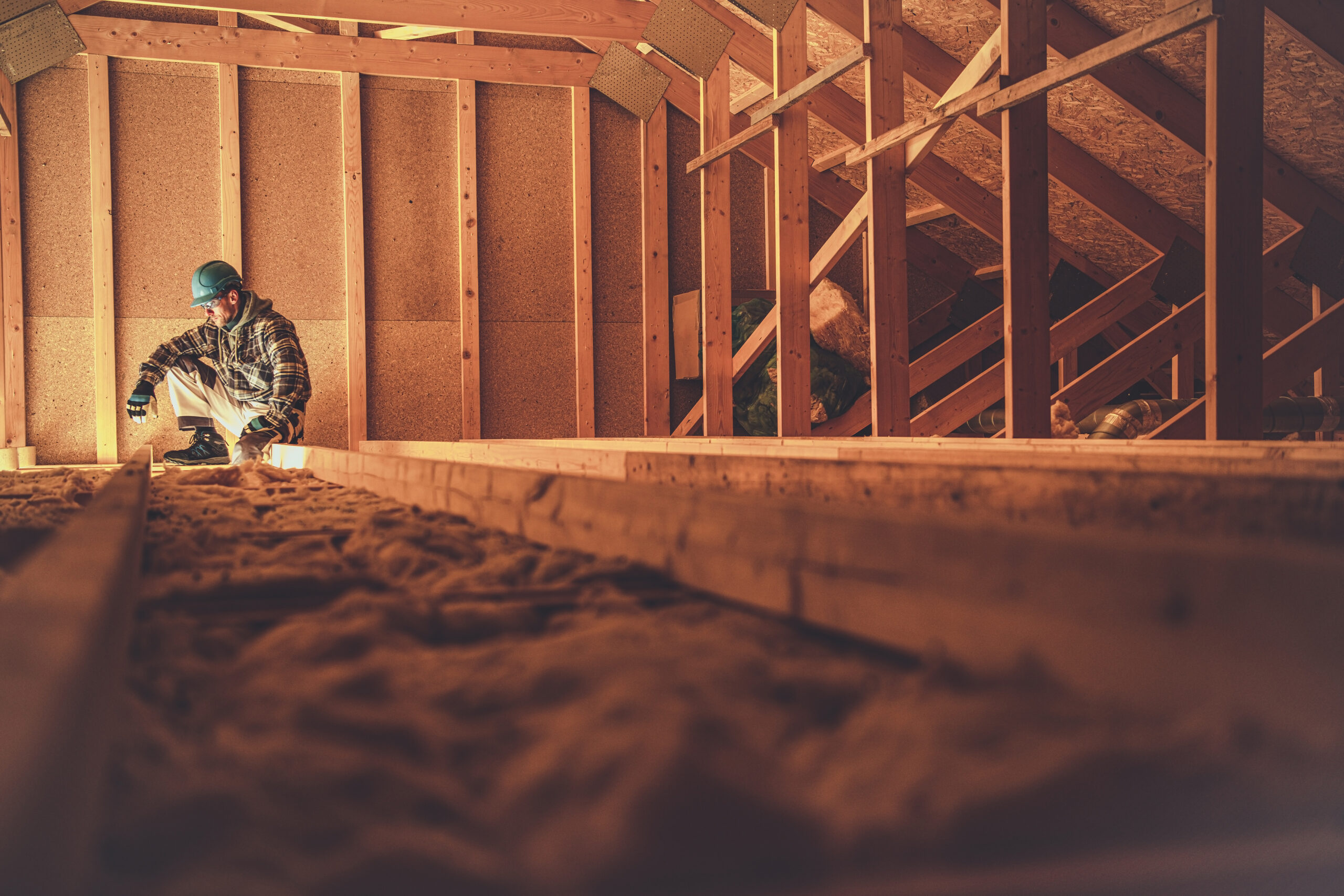
A professional assessment should consider attic access, ventilation conditions, duct placement, and any existing insulation issues such as compression, gaps, or moisture-related concerns.
Insulation is a performance upgrade. It is only as good as the installation details, and those details matter in Florida’s heat and humidity. The Roof Guys is a family-owned and operated Central Florida business serving homeowners since 2001. Our crews are trained, insured, and background checked, and we focus on solutions that improve comfort in a way you can trust.
If you are comparing home improvement contractors, it also helps to work with a company that understands how the roof system, attic environment, ventilation, and insulation interact. That building-science perspective is where insulation upgrades stop being a simple material purchase and start becoming a long-term improvement.
Planning roof work too? Explore our roof repair services and learn how attic ventilation helps manage heat and moisture that can impact roof performance
Attic & Garage Insulation
Frequently Asked Questions
R-Value is a measure of heat absorption (slowing the heat). Radiant Barrier is measured in reflectivity (blocking the heat).
Typically, a modern-day cell phone won’t be affected by radiant barrier. First, our products are not made with copper or tin which block cell signals. Second, Radiant Barrier only covers the roof portion of the house. The signal goes from your phone to the cell tower in a straight line, generally never even going through the Radiant Barrier in the attic.
Just like wrapping a baked potato in aluminum foil keeps it warm longer by holding in the heat, covering your attic insulation with Radiant Barrier holds the heat in the house. Another analogy would be that in winter Radiant Barrier works just like a space blanket which, although very thin and lightweight, holds in your body heat. A thin space blanket can keep you warmer than several heavy blankets.
Like a space suit, Radiant Barrier reflects the sun’s heat before it can warm up the insulation in your attic. When the insulation stays cooler, your house will too. Just like a space suit or Thermos bottle, the reflective surface inhibits radiant heat transfer. If the bottle starts out hot, it stays hot because very little heat is transferred to the cooler outside. If it starts out cold, it stays cold because very little heat is transferred from the warmer outside.
For the Apollo program, NASA helped develop a thin aluminum metalized film that reflected 95% of the radiant heat. A metalized film was used to protect spacecraft, equipment, and astronauts from thermal radiation or to retain heat in the extreme temperature fluctuations of space. The aluminum was vacuum-coated to a thin film and applied to the base of the Apollo landing vehicles. It was also used in numerous other NASA projects like the James Webb Space Telescope and Skylab. In the vacuum of space where temperatures can range from 250°F above to 400°F below zero and heat transfer is only by radiation. Radiant barrier is a Space Foundation Certified Space Technology(TM). Radiant barrier was inducted into the Space Technology Hall of Fame in 1996.